



Piper Lance Disappearance
Inquiry finds pilot negligence
The board of inquiry considering the disappearance of a Maltese-registered sin—gle-engined light aircraft in December, 1995 has concluded that the three main factors for the accident fell under the con~trol of the aircraft commander with whom lay the responsibility and final decision. The three-man team, headed by Dr Philip Sciberras, and including airline pilot Capt. Franz Slurmeir and aircraft engineer Mr Louis Giordimaina, said in a report tabled in parliament yesterday that the evidence submitted showed that the proximate cause ofthe accident could be attributed to:
● lack of aircraft airworthiness
● adverse weather conditions
● pilot fatigue, anxiety and stress
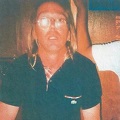
Those in charge of making decisions, as was definitely the case with Carmelo Bar-tolo, managing director of Sun Aviation, owner of aircraft and pilot of same aircaft, should be held accountable for their acts.
● lack of aircraft airworthiness
● adverse weather conditions
● pilot fatigue, anxiety and stress
Those in charge of making decisions, as was definitely the case with Carmelo Bar-tolo, managing director of Sun Aviation, owner of aircraft and pilot of same aircaft, should be held accountable for their acts.
Mr Bartolo was among the six who per-ished in the tragedy which occurred on the night of December 3, 1995 while the air-craft was flying from Djerba, in Tunisia, to Malta. With him also died Mr Matthew Aquilina, Mr Tadeusz Gorny, Mr Michael Williams, Mr Philip Farrugia and Mr Desmond Boomer. The board of inquiry said that it prim-arily based its findings of negligence on the part of the pilot in that he undertook a night flight in an aircraft not being in an airworthy condition and in adverse weather conditions. It noted that not only did Mr Bartolo know he had an alternalor problem but, in addition, he had prior knowledge of inclement weather gained from the brief-ings and also from previous inflight expe-rience during his flight from Malta to Djerba. “All these he disregarded and went ahead in what turned out to be a tragic accident"
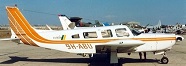
The salient facts of the inquiry, as listed by the board, were:i. Aircraft 9H-ABU - Piper Lance (PA 32) was a single-engined plane owned by Sun Aviation Ltd and registered in the public category.ii. Mr Bartolo had been flying on an FAA commercial pilot's licence and instrument rating smce March 31, 1994 and April 10, 1995 respectively. Prior to that he was flying on an FAA private pilots licence obtained on November 10, 1990.iii. Mr Bartola had been granted only private pilots privileges on single-engined aircraft.iv. Mr Bartolo was making use of two FAA licenses, one original and the other a photocopy on which there appeared an intentional obliteration of specific limit-ing details.v. On the strength of evidence collected there was a clear indication that Mr Bar-tolo was
involved in the transportation of passengers for reward, notwithstanding that Sun Aviation did not have the required air service license. Police investigations and other documents on record confirm this factvi. Mr Bartolo, as managing director of his two companies - Sun Aviation and Excelair - fused and confused both com-panies to suit his purpose, particularly when Excelair faced difficulties. These dif-ficulties included the aircraft being tem-porarily impounded by prohibitory injunc-tion, or grounding by direct order of the Department of Civil Aviation (DCA) a result of non-compliance with regulations, or the unavailability of sufficient flight crew to man the aircraft. The records showed that the many warnings meted out by the DCA to Mr Bartolo and his companies had been indicative of the pre-vailing situation.vii. Mr. Bartolo had operated to Djerba on more than one occasion. The Tunisian
Piper Lance Disappearance
Precious time lost in activating search
authorities had in fact confirmed that he had been a known person at Djerba airport.
viii. The an-craft: left Djerba on December 3. 1995 in adverse weather conditions much similar to the situation on the outbound flight from Malta to Djerba on December 2, 1995.
ix. Mr Bartolo had actual knowledge from the Met Office briefings and undoubtedly from his own observations of the con-ditions prevailing at the time, indicating that be would encounter deteriorating weather on the intended route.
x. The records and passenger testimonies showed that the air-craft did encounter severe weather conditions on both sec-tors.
xi. Mr Bartolo failed to better familiarise himself with potential hazards, such as icing and thun-derstorms, particularly when he had already confronted same haz-ards on his outbound flight from Malta to Djerba.
xii. Mr Bartolo failed to per-ceive that conditions were unsafe for himself and his passengers. This was evident from his lax attitude towards briefings, docu-mentation and operation of his aircraft.
xiii. The aircraft flight manual limitations stated that the air- craft must not be flown in icing conditions. The freezing level on this particular flight was reported at an altitude of between 6,000 and 7,000 feet with heavy precipitation on both sectors, including heavy hail. The outbound flight was operated at 10,000 feet and the inbound flight at 9.000 feet.
xiv. Given the known state of the alternator belt, as it resulted from the passengers account on the outbound flight, the time of night, weather conditions and the time that would be needed in repair same, the pilot flew the aircraft on the return sector not in conformity with the provision of the aircraft flight manual.
xv. As the aircraft operated under the conditions indicated, the sole battery had limited time. Expert Paul Lehman pointed out that the short duration of the bat-
viii. The an-craft: left Djerba on December 3. 1995 in adverse weather conditions much similar to the situation on the outbound flight from Malta to Djerba on December 2, 1995.
ix. Mr Bartolo had actual knowledge from the Met Office briefings and undoubtedly from his own observations of the con-ditions prevailing at the time, indicating that be would encounter deteriorating weather on the intended route.
x. The records and passenger testimonies showed that the air-craft did encounter severe weather conditions on both sec-tors.
xi. Mr Bartolo failed to better familiarise himself with potential hazards, such as icing and thun-derstorms, particularly when he had already confronted same haz-ards on his outbound flight from Malta to Djerba.
xii. Mr Bartolo failed to per-ceive that conditions were unsafe for himself and his passengers. This was evident from his lax attitude towards briefings, docu-mentation and operation of his aircraft.
xiii. The aircraft flight manual limitations stated that the air- craft must not be flown in icing conditions. The freezing level on this particular flight was reported at an altitude of between 6,000 and 7,000 feet with heavy precipitation on both sectors, including heavy hail. The outbound flight was operated at 10,000 feet and the inbound flight at 9.000 feet.
xiv. Given the known state of the alternator belt, as it resulted from the passengers account on the outbound flight, the time of night, weather conditions and the time that would be needed in repair same, the pilot flew the aircraft on the return sector not in conformity with the provision of the aircraft flight manual.
xv. As the aircraft operated under the conditions indicated, the sole battery had limited time. Expert Paul Lehman pointed out that the short duration of the bat-
tery life resulted in the loss of pri-mary flight instruments, de-icing equipment, communications, lighting and navigational instru-ments, making it impossible to complete the flight
xvi. Mr Bartolo failed to judge the actual effect of the weather on his aircratt, especially consider~ing its known state prior to take-of from Djerba.
xvii. Mr Lehman positively identified wreckage found as being part of Piper Lance 9H-ABU, serial number 32R-77 80410.
xviii. On the strength of the board's own observation and on the authority of Mr Lehman, the state of the wreckage was consis-tent with a severe impact with the surface of the water.
xix. Based on the authority of a forensic expert, the pilots' wallet and contents recovered together with the wreckage showing long-term exposure to sea water.xx. The evidence showed that more precious time than nor-mally expected was lost in acti-vating search operations and there was lack of coordination between the various departments involved.
xxi. The armed forces of Malta did not have the proper equip-ment and infrastructure for an extensive search at the range in question.
xxii. During search and rescue operations, no sightings of sur-vivors or any wreckage were reported.xxiii. Despite the fact that the emergency locator transmitter (EMT) was in commission and presumed serviceable, the equip-ment would not function once immersed in water, thereby giv-ing no indication of the location of the wreckage.
xxiv. Tunisian air traffic con-trol tapes reflected the clarity in communication during approach to Djerba and the normal tone of the pilots voice. In contrast, on the return flight, the conditions and sequence of the tape in par-ticular the deteriorating power output of the transmitter and the clipped voice of Mr Bartolo after the first 10 minutes of the flight as well as the last transmission were indicative of a state of excitement and anxiety.
xvi. Mr Bartolo failed to judge the actual effect of the weather on his aircratt, especially consider~ing its known state prior to take-of from Djerba.
xvii. Mr Lehman positively identified wreckage found as being part of Piper Lance 9H-ABU, serial number 32R-77 80410.
xviii. On the strength of the board's own observation and on the authority of Mr Lehman, the state of the wreckage was consis-tent with a severe impact with the surface of the water.
xix. Based on the authority of a forensic expert, the pilots' wallet and contents recovered together with the wreckage showing long-term exposure to sea water.xx. The evidence showed that more precious time than nor-mally expected was lost in acti-vating search operations and there was lack of coordination between the various departments involved.
xxi. The armed forces of Malta did not have the proper equip-ment and infrastructure for an extensive search at the range in question.
xxii. During search and rescue operations, no sightings of sur-vivors or any wreckage were reported.xxiii. Despite the fact that the emergency locator transmitter (EMT) was in commission and presumed serviceable, the equip-ment would not function once immersed in water, thereby giv-ing no indication of the location of the wreckage.
xxiv. Tunisian air traffic con-trol tapes reflected the clarity in communication during approach to Djerba and the normal tone of the pilots voice. In contrast, on the return flight, the conditions and sequence of the tape in par-ticular the deteriorating power output of the transmitter and the clipped voice of Mr Bartolo after the first 10 minutes of the flight as well as the last transmission were indicative of a state of excitement and anxiety.
xxv. Review of the mainte-nance records did not expose bearings on the incident. How-ever, the varying methods of recording left much to be desired.xxvii. The DCA did not inform the aircraft manufacturer of the incident as required to do in terms of TCAO rexgulations.xxvii. The DCA failed to con-duct effective investigations of their own into Mr Bartolo inves-tigations, as was highlighted in the investigating police officer's report.xxviii. Considering all aspects, Mr Bartolo failed to comply with the ordinary standard of care commensurate with the danger-ous consequences which were reasonably comprehensible. The board also made a number of recommendations. These included:
● A review of the Air Accident Regulations of 1966, including the setting up of a permanent National Accident Investigation Board or a similar body, inde-pendent off the DCA.
● The DOA should have at its disposal adequate resources to periodically inspect and monitor all aviation activities within its jurisdiction.
● A revision off licensing regulations obliging all pilots off Mal-tese registered aircraft to regis-ter their licence with the DCA.
● Technical log records of air-craft in a public transport cate-gory should be kept at the point of departure
● Prior to the granting of an air services permit, an operator should have an adequate and proper set up.
● Air traffic control (ATC) training of operational personnel should be recurrent and this should include emergency response simulation.
● Procedures for the imple-mentation of search and rescue operations should be reviewed, stressing better coordination and timely reactions between depart-ments involved and enhancing inter-departmental communica-tions.
● Studies should be carried out to determine the equipment needed to conduct search and res-cue operations adequately and efficiently.
● A review of the Air Accident Regulations of 1966, including the setting up of a permanent National Accident Investigation Board or a similar body, inde-pendent off the DCA.
● The DOA should have at its disposal adequate resources to periodically inspect and monitor all aviation activities within its jurisdiction.
● A revision off licensing regulations obliging all pilots off Mal-tese registered aircraft to regis-ter their licence with the DCA.
● Technical log records of air-craft in a public transport cate-gory should be kept at the point of departure
● Prior to the granting of an air services permit, an operator should have an adequate and proper set up.
● Air traffic control (ATC) training of operational personnel should be recurrent and this should include emergency response simulation.
● Procedures for the imple-mentation of search and rescue operations should be reviewed, stressing better coordination and timely reactions between depart-ments involved and enhancing inter-departmental communica-tions.
● Studies should be carried out to determine the equipment needed to conduct search and res-cue operations adequately and efficiently.