

N.C.I.S. Interpol London,
P.O. Box 8000 Spring Gardens,
Tinworth Street,
London SE11 5EN.
13th September, 1997.
For attention of : Mr. J. W. Lloyd,
Your Ref : D-AG-4C-1362B-96
Dear Mr. Lloyd,
Further to my last correspondence of 23rd February, 1997, my on-going search for my missing son Desmond or at least some factual information regarding the nature of the tragedy which befell him and his fellow passengers on 2nd/3rd of December, 1995, has not abated, neither has the fear and apprehension we and the other families endure arising from the indifference of a stop-go lack lustre enquiry in Malta and the deafening silence from the many sources, diplomatic, security, religious, civilian and media, through whose offices we have sought assistance without response or acknowledgement.
The purpose of this correspondence is to bring to to-date with my own activities during the last nine month and to supply you with documentation and photographs which I trust will be of interest and assistance to your organisation.
Document A
This document relates to my visit to Malta on the 14th/15th May, 1997, when I viewed and photographed the debris. My thoughts and opinions are clearly stated.
Document B
This is a copy of the (translated) Tunisian Board of Enquiry Report. You will note this report starts with the plane on the runway preparing to take off. There is no comment on what time passengers (if any) checked in, time of boarding etc., no names of officials on duty in the departure area or in the control tower.
Document C
An explanation of the photograph evidence.
Note the volume of debris recovered is very small and specific given the overall size of the plane.
1. This shows the remains of the instrument panel. The steering column with the right arm missing. The rudder pedals and the control handles for engine, Ailerons and flaps, also depicted is one of the two seat belts recovered.
2. A close-up of the bottom of the steering column, the accumulation of rust on steel suggest this item was out of the water a very long time, also shown are rudder pedals with name Piper and the control handles.
3. The control cable and linkage from around the steering column, note, on end of stainless steel cable frayed and bent, the investigator stated this condition occurs when cable is stretched beyond breaking point. The other end suggests a twisted wrung off break. (No explanation why the two ends should differ.)
4. The landing gear lever/handle, the handle is in one first notch suggesting the landing gear was partially lowered, also depicted are the two seat belts.
5. Another close-up of rudder pedal and bottom of steering column.
6. One of the two sets of seat belts and securing fixtures which were ripped from the Floor securing bolts were bent. The belts were stretched, (elongated) beyond belief, you will note the release lever is compressed into and on top of the retaining mechanism. You will also note the name and number plate of the manufacturer together with the control lever previously mentioned.
7. Aileron Servo Motors, again note the aluminium name plate which shows no sign of salt pigment or corrosion notwithstanding we are asked to believe it was eight months in the brine of the Mediterranean Sea.
8. Auto Pilot Motor, again note the very good condition of the name plate.
9. This is part of the main spar with floor carpet in place, this spar is the main section across the body of the plane to which the wings are attached it is positioned directly behind the pilot and co-pilot seats.
10. The spar with the floor carpet.
11. Pulled back to reveal No. 80412. This number is the manufacturer's registration for this plane and is inscribed using indelible marker on this component on each plane during the manufacture.
12. These depict the frames upon which the pilots seats are secured. You will note the retaining brackets are ripped off.
14. These are the two pieces of fuselage skin from which Mr. Lehman calculated the possible angle of entry of the plane into the sea. It is important to record that these items are totally different to the parts of fuselage depicted in the photographic evidence submitted to the Court in November, 1996.
15. The item depicted here is the only surviving item from the pilot's instrument panel, it is an indicator light " approximately 2 cm x l cm and it is in perfect working order. (I checked it with instrument and magnifying glass.) Mr. Lehman explained this light indicates that the right side wing tip navigation light is on or off. He explained that had the right hand wing tip light been on when the plane hit the water, this would have caused an electrical short in the light circuit which would have blown the filament in 3D2 bulb. The fact that the filament in the bulb is intact suggests the
plane was flying without any navigation lights in the on position. 4
16. These depict the sections to the rear floor area
17. of the co-pilot's seat.
18. Another close-up view of 16 and 17. Note the cable
19. ends, these appear to be snipped or snapped off, generally at the same point. Note there is no sign of stretch which one would expect to find in a ripping apart format.
20. Is the piece of cloth found amongst the wires in this area.
Document D
The most recent sitting of the Court of Enquiry was held on 21st August and I was in attendance. I should be noted that apart from the two day sitting on 14th/15th May these sittings have an average time scale of one and a quarter hours, therefore the number and content of business being dealt with is very limited, end apart from the legal representatives of Carmel Bartolo (the pilot) others representing the various interests seldom ask questions or question the evidence being presented.
The last occasion there was any debate in the Chamber was in February when I had a head to head with the Chairman and his colleagues about the contradictory nature of the evidence being presented and withdrawn and about their lack of pro-active approach to the investigations of the aviation incident. The Chairman took umbrage at my having requested your organization's assistance and threatened to resign.
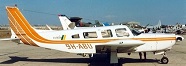
The sitting of 2lst August was attended by a Rodney wood and David Silts who were passengers on the plane 9H-ABU on it's outward flight to Djerba. Mr. Wood repeated his written comments that the plane was in poor condition, he smelt burning rubber, the weather was bad, he was afraid and felt the flight should have been aborted. He saw the pilot pull off the alternator belt which was in a frayed condition.
Mr. Silts confirmed the condition of the belt and the fact the pilot had it in his hand on the ground in Djerba. He was not as forthcoming about the condition of the plane but then he is Manager of Maple Libya, the company for whom Desmond and Tad Gorney worked.
It has also been established this outward flight was free, gratis, (see newspaper report June 1997) but Wood or Silts were not asked to sign any papers to this effect, nor were they told it was a free flight. I later spoke privately to Wood and Silts, Silts confirmed that on arrival as Djerba he met and spoke to Desmond and Tad Gorny in the airport cafe, he informed them the plane required repairs and with bad weather heading towards Djerba their flight would probably be delayed until Sunday, this is the last recorded sighting of Desmond or Tad Gorny.
Another witness who gave evidence was a Mr. Fenech, Manager of a private company specializing in plane maintenance, his company had serviced 9H-ABU and he expressed surprise at the comments made by Mr. Wood. After the sitting I was in a general discussion with the lawyers representing the pilot’s company, Sun Aviation/Excelair. We were viewing and commenting upon the photographic evidence of the debris, i.e. the photographs I took on l5th May, 1997, (here refer to Nos. 6 - 7 - 8 - 19) Nos. 7 — 8 depict items to which are attached manufacturer‘s name and number plates. These plates are of fine paper thin aluminium shim and I was arguing with the legal representatives that experience indicated to me that these name plates could not have survived 9 months in sea water and still be in a legible condition. The galvanic action induced by salt water on aluminium would corrode these plates to the extent they would no longer exist, neither is there any sign of galvanizing action on the rudder pedals (No. 2.)
At this point Mr. Fenech joined the discussions and after studying the photographs he said, "Mr. Boomer you are absolutely correct, those name plates could not have survived in that condition in the sea for 9 months." He informed us that prior to taking up his present post he had been a crash investigator with British Airways, he mentioned a number of air accidents he had been involved in. I took the opportunity to ascertain his views on No. 6, where the seat belt release lever is compressed into the clip mechanism. He said this condition could only have been caused by an explosion, it could not have been caused by the force of water generated by a crash, even from 9000 ft. His opinion of No. l9, the cable ends, he concurred with my opinion that these cable ends appear to have been cut off rather than having been ripped apart in a crash. The ripping apart would be indicated by stretch and pull back of the insulation cover of the cables and the cable ends would be frayed and of different lengths. This is clearly not the case in No. 19. The views expressed by Mr. Fenech while giving some measure of satisfaction, brings us no nearer an explanation or answer to the mystery we face.
The gentleman from the forensic department who had been requested to examine the pilot’s wallet and contents confirmed the wallet and contents had been in salt water, in my private discussion with him after the sitting he said he found it strange that a business man leaving Tunisia did not carry any Tunisian currency in his wallet, also he was puzzled as to the nature of the pressure that was exerted on the wallet that caused the serial numbers of the American and Italian bank note to be imprinted on each other.
The most unsettling aspects of our on-going family tragedy are the rumours which surface from time to time from what appears to be respectable reliable sources. These sources (whom I have never met) are in the main business people traveling to and from Libya and North Africa via Malta who obviously keep a discreet ear to the ground.
One of these contacts whose information was fed to us via the Aqualina family was to the effect the passengers were being held by an anti-government organisation in Libya, the word used was Mafia, who had considered a ransom demand but had decided against for fear of exposure. Sometime later the same source said the missing were being held in an area south west of Bengazi called Zillah. Enquiries indicate there is such a place, that there is an oil company of that name and that BP have a refinery/storage facility in that area, but from the enclosed map you will note there are other places with a similar sounding name. Names of persons who were presumably associated with the kidnapping were Sassan or Bashir and Anmia Caliph and Luftia.
One of the latest rumours to surface in March 1997 was to the effect that two planes, not one, were involved in whatever operation went down on 3rd December, 1995. This caused me more concern for a while until the penny dropped, that this rumour could possibly be related to Andrew Williams' statement, quote: "We feel you have a right to know your father's plane did not go down in the water, it went down on land and we know where it is."
The enclosed newspaper cuttings in Italian relate to a group of Sicilian fishermen and their vessel which went missing presumed sunk and drowned early in 1996. They were missing for months before being found by a British Consulate Official from home who was in Libya on official business. The men were "discovered" in a jail in Bengazi and were released without charge. When their story broke in Malta the Aqualina family flew to Sicily to interview them and show them photographs of the missing passengers. They told of being in four different prisons during their captivity and each jail housed around 1200 prisoners, they did not recognise anyone from the photographs but said they had seen a number of light coloured people in the jails they were held in.
The interesting tailpiece to this story is that these men were discovered by accident by a British Diplomat attached to the British Embassy in Rome. The Diplomat's name is Mr. Kevin McKole and we understand he heads the British Diplomatic Mission to Libya. The Aqualina family have spoken with Mr. McKole and he indicated he would be willing to help but he would need instructions through official channels.
To this end the families of the missing have lodged an official request through our respective government departments that Mr. McKole's assistance be sought in this matter but to date we have not had any feedback.
In June of this year I was informed that the missing pilot's wife had been warned to stay out of Tunisia or if she went there she would be shot, my source said this information came to him from the pilot's wife herself. During my informal discussions on 2lst August in Malta with the pilot's family lawyer who is claiming the plane 9H-ABU was sabotaged, i.e. damaged alternator belt and control panel wiring, I made the point of drawing the pilot's wife into our discussions, she stated me to that in an unspecified period prior to 2nd December 1995 her husband Carmelo had received threatening phone calls on his life, she said she did not know why he should have been threatened but that like her legal representative she believes her husband's plane had been sabotaged prior to the outward flight. She then proceeded to tell me that her own life had been threatened, it had been conveyed to her by a source she obviously trusts, that she was "to stay out of Tunisia," if she went there she would be shot. Quote: "It’s a risk I cannot take because if they don’t get me they will take it out on the prisoners”
This last comment shook me for a number of reasons, first Djerba is the last place any of the passengers were seen, second there is no record of Desmond, Farrugia or Williams having stayed in any of the 80 hotels in Djerba. Matthew Aqualina would normally have stayed in the Djerba Plaza, one of the better class hotels and it is only recently the Tunisian Authorities have in their report produced a document which shows Gorny and Aquilina stayed in the Hadji Hotel with Bartolo, the pilot, but the dates on Bartolo's document are different from the others.
There is also the question why Desmond and Tad Gorny should separate given they worked for the same company and would have much in common to while away their time, Matthew Aqualina would have been a stranger to Gorny and in any event his pattern of stop over had been well established including his phone calls home.
On the evening of 2nd December 1995, he phoned home on 5 occasions. The last call at 9.30 p.m. Malta time. Desmond's phone call home was at a similar time, thereafter there is no verbal or written evidence of them having been seen.
I asked Mrs. Bartolo if she believed the passengers were being held in Tunis rather than Libya, she answered with a positive yes, strangely her response conforms with my own long held suspicions on this case and for that reason I was less surprised that I otherwise should have been. I endeavoured to ascertain from her what course of action she was considering in the light of the warning and why she believed the missing were prisoners in Tunisia, she became hesitant and a little wary before our discussions were interrupted by her lawyer.
So from the foregoing you will I trust readily understand our state of mind and the fluctuations of hope and despair we now experience in our daily lives. This is the state of play at time of writing, my impression of the Court of Enquiry is that it appears to be marking time, for what reason I do not know nor could I hazard a guess.
I enclose a copy of a feature article which appeared in the Malta Independant on 28th August 1997, having read it's contents I am of the opinion that where Middle East and N.A.T.O. politics collide all incidents are possible and believable.
I trust the enclosed documentation, observations and comments will be of assistance to you and your organisation. We would appreciate any light or information you could impart which would assist us in our quest. It is important you be assured that any information conveyed to me including the source would be treated in strictest confidence as befits a former Civil Servant to whom the Official Secrets Act still applies.
Many thanks.
Yours sincerely,
Cormac Boomer