




REPUBLIQUE TUNISIENNE
***
MINISTERE DU TRANSPORT
****
DIRECTION GENERALE DE L'AVIATION CIVIL
RAPPORT D'ENQUETE
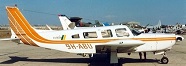
SUITE A LA DISPARITIOn DE L'AVION PA-32 DE LA COMPANGNIE MALTEAISE
EXCELAIR IMMATRICULE 9H-ABU, SURVENUE LE 03.12.1995 AUX LIMITES
DES REGIONS D'INFORMATION DE VOL (FIR) TUNIS/MALTE
Information From Base
1. INFORMATION FROM BASE
1.1 FLIGHT DEPARTURE
03h 38mn l5s
Aeroplane 9H-ABU is authorised by the Djerba control tower to commence the flight.
03h 40mn 50s
9H-ABU is authorised to drive from its stationary position to service runway 09 via taxiway Bravo.
03h 42mn 38s
9H-ABU receives flight path clearance from Air Traffic Control: authorised to Malta via direct flight path 043 from Djerba VHF Omni-Range to climb and maintain flight level 90 (9000 feet)
03h 44mn 41s
9H-ABU cleared to take-off runway 09. Windspeed 030 (North/North East/18 knots)
03h 46mn 33s
Djerba control tower advises 9H-ABU that departure will be at 03h46mn and asks him to establish communication on radial 043
03h 47mn 50s
Tunis Regional Control Centre (CCR) transmits information on the estimated time of reaching the limit of Tunisian and Maltese air space (Regional Flight Information - Tunis/Malta) as 04hl0mn on flight level 90 (message transfer)
03h 5lmn 10s Aeroplane
On reaching altitude 4000 feet at a distance of 9 nautical miles Aeroplane 9H-ABU is asked by Djerba control tower to change frequency to 129.3Mhz to establish contact with Tunis Regional Control Centre.
03h 53mn 10s
Tunis Regional Control Centre receives Aeroplane 9H-ABU call on frequency 129.3 Mhz to which it replies but the pilot does not receive the Regional Control Centre communications.
03h 56mn 55s
Aeroplane 9H-ABU, on leaving 7000 feet level at a distance of 20 nautical miles from Djerba VHF Omni Range/Distance Measuring Equipment (VOR/DME), calls Djerba control tower again on frequency 118.15Mhz to advise that he has not succeeded in establishing contact with Tunis Regional Control Centre.
03h 57mn 45s
Djerba control tower controller asks the pilot the estimated time of passing from the flight information region (FIR).
03h 58mn 13s
The pilot replies that the estimated time is 04h 10mn
04h 08mn 47s
Djerba control tower controller searches to obtain the plane’s position and has received no response after several calls. Only the frequency channel was audible without a clear message.
03h 58mn 40s
Tunis Regional Control Centre again calls 9H-ABU on 129.3 MHz without success,
04h 8mn 47s
Djerba controller transfers to the assistance equipment and calls Aeroplane 9H-ABU
Djerba controller receives Aeroplane 9H-ABU’s position (recorded on flight progression microfiche ‘STRIP’)
The controller acknowledges receipt of the pilot’s message and asks him to contact Maltese control. 'Ihe pilot acknowledges receipt of the last message by stating "UNIFORM" which corresponds to the last letter of Aeroplane 9H-ABU’s registration number.
Tunisian control then closes communication and transfers to Maltese control.
Period Of Uncertainity After The Loss Of Radio Contact
1.2 PERIOD OF UNCERTAINTY AFTER THE LOSS OF RADIO CONTACT
Following certain difficulties with the confirmed radio contact with the plane:
04h 35mn 00s
Tunis Regional Control Centre next enquires of Malta Regional Control Centre if radio contact with 9H-ABU has been established. Malta Regional Control Centre replies that the plane is not yet in contact.
04h 44mn 20s
Malta Regional Control Centre confirms that it has still not got the plane in contact
Tunis Regional Control Centre replies that the plane has already been transferred to Malta Regional Control Centre. Malta Region Control Centre clarifies that it has called the place on the frequency without response from the pilot.
04h 49mn 50s
Malta and Tunis Regional Control Centres both confirm that they do not have radio contact with the plane. In reply to Malta Regional Control Centre’s request Tunis Regional Control Centre confirms that the place took off from Djerba at 03h 46mn
()4h 50mn 30s
Tunis regional Control Centre advises Djerba control tower that aeroplane 9H-ABU has still not contacted Malta and asks for the time of leaving flight information region (FIR) Djerba tower replies that the time of leaving flight information region had taken place at 04h 1lmn
04h 55mn 40s
Djerba control tower again asks for news of 9H-ABU
05h 00mn 30s
Djerba control tower confirms to Malta Regional Control Centre that the plane had been transferred to the flight information region a 04h 11mn directly from Djerba to Malta.
05h 08mn l0s
Malta Regional Control Centre asks Tunis Regional Control Centre if it had had radar contact with the plane. Tunis Regional Control Centre replies that there is no radar cover.
05h l3mn 40s
Djerba control tower informs Tunis Regional Control Centre of its unsuccessful calls on the normal radio communications equipment and the transfer to the assistance equipment which had permitted him to re-establish contact with the plane.
05h 16mn 30s
In response to Tunis Regional Control Centre’s request for news on the radio contact, Malta Regional Control Centre replies that it has still not had contact.
The Alert Phase
1-3 ALERT PHASE
05h 18mn 00s
Malta Regional Control Centre transmits an alert message (ALERFA) received simultaneously by Tunis Regional Control Centre and Northern Zone Military Operation Centre (COZ-Nord)
05h 18mn 20s
Tunis Regional Control Centre and Djerba control tower exchange information on the weather at Djerba (wind 30 degrees with a force of 30 knots, flight duration 1h50mn and that the aeroplane normally remains 20 minutes for landing).
05h 38mn 30s
Djebel Kebir Northern Zone Military Operations Centre along with Military Co-ordination Detachment seek to obtain supplementary information about the ALERFA message which it has received. It is the civilian controller who replies and confirms that the aeroplane 9H-ABU has not yet established contact with Malta.
05h 40mn 30s
Following the request from Djerba tower, the Regional Control Centre advises that an
ALERFA message has been transmitted.
05h 46mn 30s
Northern Zone Military Operations Centre requests information from Military Co-ordination Detachment on the plane’s take off from Djerba (03h 49mn), the last contact with Djerba (04h 2lmn) and the duration of the flight (1h 50mn according to the flight plan).
05h 49mn 00s
On request from Tunis Regional Control Centre, Djerba tower confirms that the plane had been instructed on frequency 118.15Mhz to enter into contact with Malta at 04h 11mn.
05h 50mn 00s
In reference to the alert message issued by Malta at 05h l8mn Tunis Regional Control Centre transmits in turn a message to Malta where it specifies the last radio contact at flight information region (FIR) at 04h 11mn flight level 90.
05h 50mn 40s
The communication with Djerba (05h 49mn 00s) has been passed on to Malta.
05h 56mn 30s
Northern Zone Military Operations Centre confirms to Military Co-ordination Detachment that it has received the message from Regional Control Centre (05h 55mn). As for the request relating to the radar there is no visual contact to the south.
The Distress Phase
1.4 DISTRESS PHASE
06h 01mn
Maltese Regional Control Centre launches the distress phase by transmission of a DETRESFA message a copy of which is received at Northern Zone Military Operations Centre.
06h 05mn
Djerba runway office transmits the information contained in the complementary flight plan to Tunis and Malta Regional Control Centres.
06h 39mn 50s
Tunis Regional Control Centre alerts the operations room at the Ministry of the Interior (Tel: 335000) about the disappearance of the plane between Djerba and Malta.
O6h 55mn 20s
The Ministry of the Interior operations room confirms the information received at O6h 39mn 50s with Tunis Regional Control Centre
07h 04mn l0s
The (sound?) engineer on duty has been advised by Tunis Regional Control Centre about the situation regarding aeroplane 9H-ABU and that the Maltese Regional Control Centre has send a distress message about the matter.
07h l5mn
Tunis Regional Control Centre is informed of the distress by messages to the following addressees:
- Bizerte military base
- General Management of Civilian Aviation
- OPAT General Management
- Aerial Navigation OPAT Management
07h 57mn
Djerba runway office for its part advises the following addressees of the distress:
DGAC, DCEFC (OPAT), DNA (OPAT), COZ-NORD
The Search Phase
1.5 SEARCH PHASE `
08h 50mn
Malta Regional Control Centre advised by message that the Maltese Centre for Search and Rescue Co-ordination (RCC) is prepared to proceed with the search for the lost plane with the help of two search and rescue (SAR) planes based at Malta in a zone of the Maltese Search and Rescue region (SRR) defined as follows: (see annexed card)
34 degrees 35°N 11 degrees 30°E
34 degrees 48°N 11 degrees 53°E
34 degrees 25°N 12 degrees 15°E
34 degrees 01°N 11 degrees 30°E
34 degrees 35°N 11 degrees 30°E
In the same message Maltese Regional Control Centre asks Tunis Search and Rescue (Tunis Search and Rescue, even though the terms of SAR N 75-155 decree of 7 March 1975 has not yet been made use of in Tunisia to this day) to proceed to search in the zone relevant to the Tunis SRR Search and Rescue Co-ordination Centre to the south of the latitude 34 degrees 35N. At the same time it requests authorisation from Tripoli Search and Rescue to permit two Maltese planes to search in the relevant area of the Maltese defined search zone which overlaps with a part of the Libyan search and rescue region.
10h 33mn
Tunisian air force planes begin searching in the different zones of Tunis search and rescue region and continue throughout the day.
15h 46mn
The Search and Rescue Co-ordinator of the Maltese Centre for Search and Rescue Co-ordination has asked that it be made precisely aware of the zones in which searches have been undertaken by Tunisian and Libyan search and rescue planes and to confirm that these searches have been completed. As for Malta Centre for Search and Rescue Co-ordination, nothing has been turned up and the searches in the Maltese flight information region will continue right up to sunset and will re-commence the following morning (4.12.95). In the same message, the Maltese express their wish to receive a precise reply about the search zones covered by the Tunisians.
17h 43mn
The Search and Rescue Co-ordinator of the Maltese Centre for Search and Rescue Co-ordination gives an account of the suspension of the searches for the day (3.12.95) and of the resumption of operations the following day (4.12.95) at first light and asks Tunis and Tripoli Search and rescue Centres if they wish to pursue the searches. At 7h 30mn on 4.12.95 the Northern Zone Military Operations Centre, in the absence of a Tunisian Search and Rescue operative and an agreement on co-operation in the Search and Rescue domain with Malta on which the search and rescue region borders, refers to two messages sent the previous evening a l7h 43mn by the Maltese Search and Rescue to initiate and advising that the searches have begun in the zone propose by Malta. This constituted the beginning of direct co-ordination between the Northern Zone Military Operations Centre, Tunis and Malta Regional Control Centres and unites the co-ordination duties normally devolved to a single regional control centre.
Tunisian Air force searches in the zones co-ordinated with Malta Regional Control Centre are pursued right up to 7.12.95. The searches of the Maltese coast are pursued right up to today (18.12.95) with some days of interruption. The TUNISAVIA company participated equally in the searches by providing two helicopter flights on 3.12.95. Then the Tunisians, Maltese with the participation of the US and Libyan navy proceeded to search in their respective regions with some flexibility in using their respective air spaces. All the searches have been unsuccessful to date.
Interception Of A Distress Signal By A Boat Sailing Towards Sfax
1.6 INTERCEPTION OF A DISTRESS SIGNAL BY A BOAT SAILING TOWARDS SFAX
On 4.12.95 around 08h 00mn SFAX control tower was informed by the "British Gas company" at Sfax of the following:
The boat "Supply Asperay" announces having received a distress call on 3/12/95 at 04h 44mn originating from a location at 6 nautical miles north east of Miskar 34 degrees 22°N 11 degrees 52°E on the emergency frequency 121.5 Mhz.
Taking account of the time at which the distress signal was received by the aforementioned ship (O4h 41mn) and the time of the missing plane's last radio contact with Djerba (04h 11mn) and of the estimated place of locating the distress signal, this allows a presumption that the signal received originated from the missing plane 9H-ABU. It is stressed that this information had been transmitted as soon as it had been received by the services controlling air traffic at the Northern Zone Military Operations Centre (COZ-Nord Djebel Kebir) and the Maltese Search and Rescue Centre.
After verification from the world centre for location distress signals by satellite at Toulouse (COSPAS/SARSAT) it is proven that during the day of 3.12.95 Tunisian territory was not covered by satellite during the hours of 3h 30mn and 4h 52mn.
This would explain that the distress signal detected by the "Supp1y Asperay" at 04h 41mn and which would not have lasted throughout the relevant time, could not have been detected at the same time by the satellite.
Information On The Personell
1.7 INFORMATION ON THE PERSONNEL
The Pilot
Carmelo Bartolo : born 1.3.48, Maltese
Licence: Profession American pilots licence (FAA) No.2442642 issued on 10.4.95
Last medical examination - 13.5.95
Licence last updated - 19.5.95.
Qualifications:
- Flights on multi and single engine aircraft
- Multi engine aircraft with professional pilot privileges
- Single engine aircraft with private pilots privileges
- Pilot instructor
The pilot was not in possession of a certificate of validation for his licence, issued by the Maltese civil aviation authorities. Such a document did not exist for practising as a private pilot (as required by the Maltese Civil Aviation Department).
Passengers
Matthew Aquilina 28.6.73 Maltese
Philip Farrugia 26.4.53 Maltese
Desmond Boomer 17.11.56 Irish
Tadeusz Gomy 5.1.47 Polish
Michael Williams 14.6.46 British
Information On The Plane
1.8 INFORMATION ON THE PLANE
Constructor: Piper Aircraft
Type: PA-32 R 300
Serial number: 7780410
Registration Number: 9H-ABU
Seats: 6
Owner: Sun Aviation Ltd., Malta
User: Excelair Services Ltd., Malta
Maltese certificate of navigatability, passenger transport category, carrying no. 66/1 issued by the Maltese Department of Civil Aviation on 15.1.92 at valid up to 15.1.96,
Maximum weight on take off: 1600kg
Type of fuel: AVGGAZ 100LL
Meterological Conditions
1.9 METEOROLOGICAL CONDITIONS
According to the file provided by the National Meteorological Institute, the morning of 3.12.95 was marked by an unstable depressed weather system with a passing atmospheric disturbance on the Tunisian and Maltese flight information regions which had led to the development of thunderstorms.
The TEMSI card (low altitude) of the flight file, put at the pilots disposal by the Djerba Office of Protection indicates at 03h the presence on the Tunisan/Maltese and the central Mediterranean basin a layer of cloud of 5 to 7 cumulus octas which the base is a 3000 feet and the summit at 9000 feet surmounted by another layer of medium and elevated clouds whose base is at 1100 feet and the summit between 20000 and 32000 feet with the presence of cumulonimbus submerged in these layers the base of which is at 2000 feet and the summit at 30000 feet.
Observation from 04h 00mn to 06h 00mn:
Djerba Airport:
Weather overcast with the presence of low clouds of which the base is at 1600 feet and cumulonimbus of between 1 to 4 octas of which the base is at 2000 feet.
Visibility is between 4000 and 5000 metres
North-north east wind at 14 to 17 knots
Malta Airport
At 04h 00mn
Sky overcast with the present of cumulonimbus clouds between 5 to 7 octas of which the base is at 1200 feet.
Visibility 4000 metres
North-north east wind at 13 knots
Thunderstorm is with rain
Navigation Aids
1.10 NAVIGATION AIDS
Djerba airport is equipped with aerial navigation aids (ILS, VOR, DME, LOCATOR) which were functioning on the day on which the plane in question disappeared.
The Djerba to Lampedusa main route on which the plane lost radio contact with the Maltese air traffic control is situated above sea level on a radial 043 from the Djerba VHF Omni Range.
Telecommunications
1.11 TELECOMMUNICATIONS
Taking account of the low altitude of the place, it has been agreed between Tunis Regional Control Centre and Djerba control tower that this was the last bearing radio contact had with the plane was on its leaving Tunisian flight information region and its transfer to Maltese control. In the course of that evening, a momentary interruption in direct contact had been recorded and had been overcome by recourse to the assistance equipment at Djerba. The pilot had not indicated any anomalies during his flight in Tunisian airspace.
Information On The Airport
1.12 INFORMATION ON THE AIRPORT
Djerba International Airport is equipped with a runway 09/27 3100 metres long and lit with beacons.
Information On The Wreckage And Crash
1.13 INFORMATION ON THE WRECKAGE AND THE CRASH
The searches undertaken have not yet uncovered anything up to the present day.
Analysis
II - ANALYSIS:
As a result of the absence of information on the wreckage and the persons it is difficult to proceed to analyse in any depth the circumstances of this disappearance.
However certain indications allow a supposition that the plane would have sent a distress message (the message picked up by the ship ‘Supply Asperay’ while sailing towards Sfax at 6 nautical miles from the ‘Miskar‘ oil rig platform.
The questions is posed in respect of the non-detection of this message by the COSPAS world localisation satellite system. .
After verification by the COSPAS reception centre at Toulouse, it has been proven that during the day of 3.12.95 Tunisian territory was not under satellite cover between 03h 30mn and 04h 52mn. This would explain why the distress signal detected by the ‘Supply Asperay’ ship at 04h 4lmn which would not have lasted throughout this time could not have been detected by the satellite at the same time.
Furthermore, it is emphasised that the weather conditions prevailing on the day of the planes disappearance in the region covering the Djerba/Malta route were unfavourable with the presence of cumulouimbus clouds (unstable and frosty). all the more so that the flight took place at night by instruments only.
Preliminary Investigations
III - PRELIMINARY INVESTIGATIONS
The preliminary examination of the debris and the documents has uncovered the following:
III-1 Documents
- An American pilots licence bearing the number 2442642 from 4.10.95
- A Maltese professional card bearing the number 4031 valid up to October 1997
- A Maltese identity card bearing the number 2977480 from 24.1 1.94
- Three bank credit cards
- Personal visits cards
- Bank notes (US dollars and Maltese lira)
The documents and bank notes which belonged to the pilot Carmel Bartolo were arranged in a wallet with some keys and were in a legible enough state to be deciphered.
III-2 Debris
The Debris which was for the most buckled appeared as thus:
- the lower part of the cockpit with the engine controls, the direction ‘palonniers’ the control lever of the window, the timoneries and cabling from the flight control.
- a fragment of the lower part of the fuselage with some cabling and electrical components
- four seat belts among which two belonging to the front seats were closed and torn from their holdings.
fragments of flooring and a structure in the form of zi ladder which could be a floorboard.
• bits of the plane’s upper and lower upholstery.
First indications on this part of the wreckage have not revealed any trace of fire. Also, the front seat belts which were closed and torn out of their holdings at the state of the retrieved debris would show that the plane had undergone a violent impact with the surface of water (a strong acceleration at the moment of impact).
It is worth noting that the positions of the engine controls and the flight control levers could give some idea of the flight speed and the plane’s relative position before impact. These positions could be determined after a minute examination in an aeronautical workshop.