

Missing From Malta
Plane Disaster or Plain Deception
The story of an Irish family’s lonely but determined seven
year search to find the truth about their loved one’s
mysterious disappearance while returning home from the
Libyan Oilfields.
Introduction
In the early hours of 3 December 1995 a light single-engine Piper Lance aircraft disappeared from Djerba Airport, Tunisia, along with five passengers and their pilot. Seven years later mystery and controversy continue to surround the events of that night.
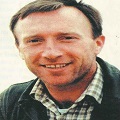
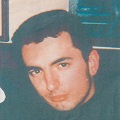
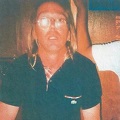
Among the disappeared is 38-year-old Belfast engineer, Desmond Boomer. His travelling companions that fateful night were: English engineer, Michael Williams (49); Polish national, Tadeus Gorny (48); and Maltese nationals, Philip Farrugia (43), Matthew Aquilina (22) and their pilot, Captain Carmelo Bartolo (47).
Boomer has a wife and five children who live in Co. Down, Ireland. He worked in the Libyan oil fields for a UK based company, MAPEL Engineering. Because of UN sanctions against Libya following the Lockerbie bombing, foreign workers were forced to fly to enter or exit Libya through neighbouring countries. MAPEL’s preferred route for employees was an international connection to and from Malta with a private (and possibly illegal) connection on a small aircraft between the Mediterranean island and Djerba Airport, Tunisia. Boomer was en route home to Belfast for his Christmas holidays when he disappeared.
There are three possible explanations:
(1) Their light aircraft, a Piper Lance PA-32 R 300 (6 seater), which had serious mechanical difficulties on its outbound flight from Malta, was irresponsibly flown into a raging Mediterranean storm by its experienced Maltese pilot, Captain Bartolo, and crashed off the coast of Tunisia.
(2) The possibility that Boomer and his travelling companions were abducted by Islamic fundamentalists and my still be alive.
(3) The third possibility, and one which cannot be easily dismissed, is that all five passengers were in the wrong place at the wrong time when Islamic fundamentalists arrived to exact revenge on a marked man, their pilot, Carmelo Bartolo. Bartolo was the owner of two small private Maltese airlines, Excelair and Sun Aviation. Five weeks earlier the Maltese Press had implicated him, wittingly or not, in the assassination of the leader of the Islamic Jihad, Fathi Shqaqi, by assisting members of the Israeli Mossad to escape from the island on 26th October 1995.
Part 1: Plane Disaster or Plain Deception?
Desmond Boomer was due home for Christmas on 13th December 1995. However, on Saturday, 2nd December, he called home twice from Djerba Airport, Tunisia. The first call was in the afternoon to inform his wife Mandy that he was coming home early and probably for good. His second call was around 9.30pm (8.3Opm GMT). He informed her there was "very bad weather" and that he did not expect to fly out of Djerba until sometime the following day. His parting words are etched eternally in his wife's memory: "I can’t wait to get home to you and the kids Amanda. You and the children are my whole life, my reason for everything I do".
British passenger, Mike Williams, called Ray Mercieca, the lead guitarist and singer of ‘The Characters’, the most popular rock band in Malta at the time, which Williams managed, saying that he would overnight in Djerba due to a bad storm. Williams told Mercieca that he would call him as soon as his flight was leaving so that he could, as arranged, collect him at the Luqa Airport. The call never came. Speaking to Magill from Malta, Ray Mercieca said, "Mike was my best friend. He was always reliable. If he said he would do something, he did it. Time was never a factor. We often phoned one another at all hours of the day and night. Before getting on that plane Mike would have called me. I don‘t believe he ever got on that plane and I am sceptical that the plane ever took off that night or the following morning".
A Maltese passenger, Mathew Aquilina, rang home on five occasions on Saturday, 2 December, the last time around 9.30pm to say he would be stopping over because of bad weather. Similarly, Captain Baltolo’s wife, Antonia, testified that her husband called her at 10.45pm to inform her that he was going to stay overnight.
Technical Difficulties on outbound flight
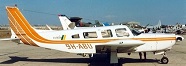
The light aircraft, registration 9H-ABU, that was to bring them to Malta, commenced its outbound journey from Malta at 6.33pm on Saturday 2 December l995. landing at Djerba Airport at approximately 8.29pm. Bartolo flew four passengers on the outbound flight from Malta. They included MAPEL’s Libyan area manager, Mr. David Silts. By all accounts it was a harrowing journey, and not just because of the prevailing Weather conditions.
Three of the outbound passengers, Silts, Roger Woods and Omar Klebb. gave evidence to a Maltese Board of Enquiry investigating the planes disappearance. They testified that on engine start-up a screech was heard and that the aircraft headed straight into a violent lightening storm in which everything iced up. They reported that the aircrafts portable Global Positioning System (GPS) was not functioning throughout the course of the flight. Rodney Woods, who sat next to the pilot throughout the flight, testified that 1O minutes out of Djerba "for a second time I smelt rubber burning...I noticed that the volt meter and the amp meter were not working."
After landing at Djerba, Woods said, "we went to collect our luggage from the hold and I noticed that the alternator drive belt was all torn.” Woods told the inquiry that Captain Bartolo, "put his hand in and tore it off easily in front of everyone". All three witnesses stated that, in their opinion, the aircraft was in no fit state to return to Malta.
To replace the alternator belt required at least three hours of specialised maintenance, involving the removal of the propeller. NCA International, a Maltese based aircraft maintenance company held the repair contract for aircraft owned by Captain Bartolo’s two Maltese companies. Excelair and Sun Aviation, Before any other company could undertake repair work on his aircraft Bartolo was required to obtain written authority from NCA otherwise his insurance cover would be invalid. Bartolo did not contact NCA for repair clearance that night or the following morning, suggesting that no repairs were carried out on his aircraft.
According to a report from the Tunisian Ministry of Transport, obtained by Magill, Captain Bartolo checked into the Hadji Hotel. Djerba, along with two of his return passengers, Matthew Aquilina and Tadeusz Gorny it appears, therefore, that Bartolo was resigned to overnight in Djerba.
Mysteriously, despite all of the phone calls to loved ones and friends from pilot and passengers saying they were overnighting at Djerba because of bad weather; despite the fact that the black tempest was still raging and showed no sign of abating; despite the serious technical difficulties experienced by the aircraft on its outbound flight; and despite the fact that there is no evidence the aircraft underwent repairs or that its Captain sought the necessary insurance clearance to enable such repairs to be carried out. a Tunisian Ministry of Transport Report states that Bartolo’s aircraft obtained start-up clearance From Djerba Tower at 03.38am and take off clearance at 05.44am.
Search and Rescue
The Tunisian Report states that Djerba Air Traffic Control (ATC) had difficulty maintaining radio contact with the aircraft but at 04.10am, on the emergency frequency, it asked the pilot to contact Maltese ATC. It is alleged the pilot responded to this request with "UNIFROM", taken by Dierba as an indication he was about to do so. The Tunisian Report then records in bold print, "The flight is therefore closed by the Tunisian Control and transferred to Maltese Control.”
It appears, however, that Malta had not been informed of any inbound flight by Tunisia, which is standard aviation practice Bizarrely, at 04:35, 25 minutes after its last alleged radio contact with Captain Bartolo Djerba Control Centre telephoned Malta ATC asking it to make radio contact with the aircraft.
Initially Malta ATC treated the flight as a communication failure. However. when the aircraft failed to arrive, or make contact. Malta Radio was asked to broadcast distress messages so that ships in the area would look for signs of a possible crash. These broadcast commenced at 7.45am.
The first aircraft to assist in the search mission was dispatched by the Italian military at 8:12am. almost four hours after concern for the safety of the flight began. Other local civilian aircraft were called on to assist with the search mission. Shipping vessels and oilrigs in the Mediterranean were also contacted and asked to participate in the search.
Philip Bartolo (now deceased). the son of missing pilot, Carmelo Bartolo, told Cormac Boomer that the planes spread out over the route it it was expected his father would fly on his return trip from Djerba. They flew at around 500 to 1000 feet into the storm towards the general area of the reported crash and they saw and found nothing. "No one will ever convince me that that plane went down in the water and nothing floated from it," he told Boomer.
At 12 noon. the US Embassy in Malta offered assistance. A US Air Force P3 Orion aircraft was dispatched from Sigonella Air Base. Sicily. to join the search. The search operation continued from 3rd — 10th December 1995 and concentrated on the FIR boundaries between Malta, Libya and Tunisia. without success.
Wreckage Found
In October 1996, 10 months after the incident, the Maltese Board of Inquiry was officially informed by Tunisia that local fishermen had pulled wreckage from the Piper Lance aircraft to the surface. However, the Tunisian government has never identified the fishermen, the name of their vessel or the exact coordinates of where the wreckage was allegedly discovered. Nor were they pressed by the Maltese Board of Inquiry to do so.
On 14 November 1996 the Maltese Board of Inquiry was shown photographs of the wreckage taken by the Maltese Charge d’Affaires in Tunis. These also included photographs of Captain Bartolo's wallet and its contents. Allegedly found amongst the wreckage. No specific date is given regarding the actual date the wreckage was discovered. However, Magill has in its possession French and English versions of an official 15-page report on the missing aircraft produced by the Tunisian Ministry of Transport, dated 18 December 1995 (15 days after its disappearance), in which details of the wreckage is given. In both reports information on the wreckage is provided after the official report has been signed and dated on page 13.
The Maltese Board of Inquiry report, published in January 2000, states that, "following the recovery of the wreck, a search was carried out in November 1996 in the indicated area. This search proved unfruitful".
Cormac Boomer. an engineer by profession. told Magill:
On 16 May 1997 I examined and photographed the alleged wreckage and it is obvious their condition was not compatible with their having spent ten months in the salt brine of the Mediterranean Sea. There was no indication of salt pigment or the corrosion one would expect to find in such circumstances. It is claimed the aircraft fell from a height of 9000 feet into the sea in a severe storm. It is strange. therefore. that the cable looms do not show any indication of the stretch, arc or rupture one would expect from the ripping apart which would occur in an aircraft descending in a headlong plunge from 9000 feet. From my visual inspection and the photograph evidence it is obvious the ends of these cables have been severed with a cutting tool.
Alternator Belt
As already stated, there is no evidence that Captain Bartolo had managed to have the torn alternator belt replaced on his aircraft. The idea, therefore, of an experienced pilot placing his own life and that of his passengers in mortal danger by taking off without an alternator belt, into a raging Mediterranean storm, is inconceivable.
However, this is the primary conclusion of the Maltese Board of Inquiry:
given the known state of the alternator belt from the passengers’ account on the outbound flight, the time of night, weather conditions, the time that would be needed to repair same, the pilot flew the aircraft on. [a] sole battery [with] limited time...this short duration on battery life resulted in the loss of primary flight instruments, de—icing equipment, communications. lighting and navigational instruments, making it impossible to complete the flight...
At a sitting of the Maltese Board of Inquiry on l4 May 1997, Piper Corporation Senior Accident Investigator, Paul Lehman, "made reference to the missing alternator belt and the depletion of the aircraft battery". According to the Inquiry Report: He affirmed that a fully charged battery would render 30 minutes of energy. However, considering the energy required to start the aircraft engine, the remaining battery life would not be more than 10-15 minutes. Moreover, he asserted that in flight, once the battery went flat, the pilot would have lost all communications...
If, therefore the aircraft did manage to start up and take-off with a fully charged engine. Lehman's expert opinion suggests the energy remaining would allow it to communicate for a maximum 10 to 15 minutes. This means that by 3.54am and 3.59am communications between the missing aircraft and Djerba Air Traffic Control would begin to tail.
The Tunisian Report states that at O3:58am Bartolo replied to Djerba ATC that his estimated time of arrival at the Maltese boundary would be 04.10am and that following this communication all efforts to contact Bartolo failed. However, at 4.10am it is claimed "The Djerba controller switches onto emergency equipment and calls aircraft 9H-ABU". The Tunisian Report states that the pilot relayed the position of the aircraft and acknowledged Djerba ATC’s request to contact Maltese Control.
Presumably, by then, with a depleted battery, Bartolo would have realised he was in very serious trouble yet the Tunisian Report clearly states. "The pilot had not indicated any anomalies during his flight in Tunisian airspace."
The Tunisian authorities made available a copy (not the original) of the alleged recording of the communication between Bartolo and Djerba Control Centre in December 1998, three years alter the incident. The Maltese Inquiry Report states "A copy of the original tape was eventually sent by the Board for examination at Farnborough by the UK Air Accidents Investigation Branch. It is not clear from the Maltese Report whether this was the copy of the original or a copy of the copy. However, Farnborough concluded, "The tone of the pilot's voice appeared to change slightly and the conversation from him appeared somewhat clipped. The content of the voice appeared to contain over this period more high frequencies giving an indication of some degree of stress or anxiety."
The Maltese Report fails, however, to note that the wife and children of Carmel Bartolo publicly stated through their lawyer. (The Times of Malta, April 23rd 1999) that they had not recognised their loved ones voice on the tape.
Piper Corporation
Mr. Lehman, the Piper Corporation Senior Accident Investigator told the Maltese Board of Inquiry that following his examination of the recovered wreckage he was satisfied it belonged to Piper Lance 9H-ABU and that it was his expert opinion the aircraft had crashed into the sea.
On Thursday 14 June 2001, I telephoned Mr. Lehman at the Piper Corporation headquarters in Florida, concerning his examination of the wreckage. A number of telephone calls were made before I was eventually put through to an extension answered by a woman who identified herself as a lawyer who was in the presence of Mr. Lehman. Mr. Lehman and the lawyer conducted the telephone conversation by conference. I asked Mr. Lehman if he would be willing to give an interview for a television documentary. His lawyer replied that questions would need to be forwarded in advance before a decision could be taken. I asked Mr. Lehman if he was satisfied the aircraft had crashed into the sea. He was heard saying to his lawyer. "I have no difficulty in answering that", to which she replied. "Okay.” He said, "Yes Sir, I believe that to be the case." I then asked Mr. Lehman if he could be certain that the aircraft crashed on the night in question. He replied. "No Sir. I can't say that for sure." Later Lehman declined my request for an interview.
In August 1999, Dr. Christian Farrugia, the legal representative of Desmond Boomer's wife, Mandy. and the Aquilina family, wrote to the Chairman of the Maltese Inquiry criticising it's failure to properly investigate the disappearance of the aircraft...the Board did not manage to procure the very best evidence available...opted to rely on incomplete testimony and procedurally defective documentation when other alternative routes...existed. This will, "wrote Farrugia, "impinge on the integrity of the Board‘s final conclusions."
Of particular note was Dr. Farrugia"s criticism that the Board had failed to investigate allegations made by Captain Bartolo’s family that "certain threats of physical harm" had been made against him in the days leading up to his disappearance. "These allegations", Farrugia argued, raised, "the possibility of foul play aimed at the pilot in the days leading to his departure on the outbound flight from Malta to Djerba".
“The allegations, he stated. "if factually correct, could have placed the whole incident on a totally different investigative plain." The fact that Captain Carmelo Bartolo appeared to be in real danger in the days leading to the disappearance of Piper 9H-ABU is, for members of the Boomer, Williams and Aquilina families, the most probable reason for their loved ones disappearance - not a plane crash. They fear a conspiracy of silence between Malta and Tunisia which they believe is evidenced by the failure of both Governments to properly investigate the alleged accident in a coherent, transparent and sensitive manner. Particularly given the international dimensions of their tragic loss. Amongst several anomalies they point to the delay and eventual failure of the Tunisian
Government to handover the alleged original recording of Captain Bartolo’s last flight for forensic analysis; the failure to identify or properly question the fishermen who allegedly found the wreckage; and the failure to have the wreckage sent for forensic examination at an independent and properly equipped laboratory to establish how long the plane lay on the seabed and whether any traces of human tissue could be found in the wreckage".
The Boomer, Williams and Aquilina families believe that the cause of their loved ones disappearance may have its roots in the murky world of the Arab-Israeli conflict and an incident which occurred on the island of Malta five weeks earlier
Part 2: Political Murder and Mystery
On 26 October 1995, the leader of the Islamic Jihad. Fathi Shqaqi, was in Malta having disembarked from the Libya-Malta Ferry ‘"Garnata". He was returning from a secret meeting with the Libyan leader, Muammar Ghaddafi. To avoid detection Shqaqi entered the island on a false passport. lt was his eleventh such visit since mid-December 1993. However, unknown to the Jihad leader, he was being shadowed by members of the Israeli secret service, Mossad.
According to Soldier of Fortune magazine, Shqaqi signed his death Warrant in January 1995 when he claimed responsibility for terrorist attacks in Israel. The article by journalists Neil Livingstone and David Halevy, claims the mission to assassinate Shqaqi was codenamed Operation Caesarea.
According to Livingstone and Halevy, by September 1995, some 40 well-equipped Mossad agents were in Malta posing as "rich tourists together with their wives”. They monitored Shqaqi as he passed through Malta on his way to Libya. It was decided to kill him on his way return.
When the Mossad base in Malta was notified that Shqaqi had re-boarded the ferry from Libya to Malta on 26 October 1995, Livingstone and Halevy claim a speedboat carried the operation’s commander and hit men to Malta from Sicily.
Shqaqi booked into the Diplomat Hotel in Sliema. While doing some early afternoon shopping two Mossad agents on a dark blue Yamaha XT motorcycle approached him and called his name. Surprised that his real identity was known he looked around and was immediately shot six times by the pillion passenger.
The Soldier of Fortune article claims the hit men were taken to Tigne where they boarded a speedboat and in 30-minutes were back in Sicily together with their commander. From there it is alleged they boarded a private jet that took them back to Tel Aviv.
However, on 5 November 1995, a month before the mysterious disappearance of Desmond Boomer and his travelling companions. A local Maltese newspaper Le KullHadd, wittingly or not, implicated pilot Carmelo Bartolo, as an accomplice in the assassination of Shqaqi. The front-page article. written by journalists Joe Mifsud and Felix Agius, sensationally claimed that the Shqaqi assassins may have left Malta on a Maltese registered and piloted private plane. Alarmingly the paper printed alongside
this story a photograph of an Excelair aircraft, one of the companies owned by Bartolo.
On the 9 November 1995 "The Times of Malta" lead with the heading, "‘Shqaqi’s assassins may have left Malta on private plane". The article, penned by journalist Sharon Spiteri, stated that the Maltese police had received information from Interpol detailing how the assassins left the island. Claiming security reasons The Time stated that no further details could be given but the article continued: "...other sources said the police were working on the theory that the men left the island on board a private plane hired from a local company and flown by a Maltese pilot." The following day however, The Times, carried a small front-page article saying that the Maltese police commissioner had refuted these assertions. Despite this, the question on many peoples mind was the identity of the Maltese pilot. Suspicions swirled around Bartolo, primarily because of the photograph of his Excelair aircraft which appeared alongside the Shqaqi article in Le KullHadd on November 5th.
The real question, however. is who was the source of these complimentary articles that appeared to deliberately finger Carmelo Bartolo as an accomplice in the assassination of the Jihad leader and what was the motivation behind them?
In February 1996. Desmond Boomers wife Amanda visited Malta in search of answers during which she had the opportunity to briefly meet journalist Joe Mifsud. Mrs Boomer told Magill that she would never forget his opening remarks to her. They had barely shook hands when he declared: "This was an unfortunate accident and nothing but that." This comment was made by Mifsud eight months before Tunisian fishermen allegedly found the wreckage of Flight 9H-ABU and less than two months after the mysterious disappearance.
Tripoli Protests
On 31 October 1995 Libyan crowds gathered outside the Maltese Embassy in Tripoli to protest Shqaqi’s assassination. The Malta Times (1 November 1995) reported on its front page that the crowds, "warned Valletta of unspecified retaliation if it did not arrest the killers of Islamic Jihad chief Fathi Shqaqi." Reuters reported that, "crowds demonstrated in Tripoli’s streets and outside the Maltese embassy, carrying portraits of Libyan leader Muammar Gaddafi and shouting their 'anger and denunciation of this abominable crime'." The Libyan news agency JANA reported that the crowd outside the embassy "read out a message to the Maltese urging them to arrest Shqaqi‘s killers or bear responsibility for the consequences of the killing on Libyan-Maltese ties." The message continued, "The Maltese authorities and the ruling party there bear full responsibility if they do not arrest the terrorists and bear the responsibility for its results on all aspects of Arab-Maltese cooperation..."
Arab reaction to Shqaqi’s murder was not confined to Libya. An estimated quarter of a million mourners attended his funeral in Palestine where he was declared a martyr. His wife Fatiyah wept at his Palestinian draped coffin and proclaimed, "This is your promised day, my comrade. This is the day of your trip to paradise." In Tehran the Coordinating Council for Islamic Propagation held a special ceremony "to proclaim consolidation with the Palestinian nation and express hatred towards the Zionist regime and its crimes." The Tehran Times, (1 November 1995) reported a similar
ceremony. held at the mosque of the University of Tehran. on behalf of the Supreme Leader of the Islamic Revolution, which "branded the Zionist regime as the major sponsor of state terrorism."
Ominously, the Islamic Jihad Movement in Palestine accused Israel’s Mossad of Shqaqi‘s assassination writing in Le KullHadd on 24 October 1999, Maltese journalist, Joe Mifsud, then researching a book on the Shqaqi assassination, wrote:
"The military section of Jihad wanted to effect attacks in Malta as retaliation for the killing of their leader, Fathi Shqaqi. .. the new leader, Ramadan Shallah, had a hard time to stop these attacks...
A cabinet meeting of the Maltese Government was called to discuss the crisis on the evening of 3 November 1995. Maltese Foreign Minister, Guido de Marco, informed The Times that the demonstrators in Tripoli had handed a statement in Arabic to the embassy for the attention of the Maltese authorities.
Malta had three immediate concerns: its own internal security, the security of its diplomatic staff abroad and its trade relations with the Arab World, particularly Libya. The incident created all manner of headaches with renewed proof that the unsavoury Arab-Israeli conflict could manifest itself on the island. The island had already been linked to the 1988 Lockerbie bombing with suspicions that the bomb on the Frankfurt/New York Pan AM 103 Jumbo Jet that killed 270 people, originated in Malta.
Amongst the matters discussed at the Maltese cabinet meeting was Libya’s suspension, on October 3l, of its ferry service to the island, "for reasons of security". Despite reported assertions by Foreign Minister de Marco that Maltese and Libyan relations, "are on the road to normality," the service did not resume on a permanent basis until 30 December 1995.
De Marco described Malta’s predicament as "a very serious situation.” In what might be interpreted as a response to the threats made against Malta three days earlier during the Tripoli demonstration he said, "The Maltese authorities are determined to continue investigating this case in order to prosecute the perpetrators of the crime, and to seek identification of anyone, local or foreign. who might have somehow assisted or facilitated it, or had prior knowledge of its occurrence."
It is against this background that members of the Boomer, Aquilina and Williams family are increasingly suspicious of the Le KullHadd and The Times articles published on November 5th and 9th, 1995, which effectively fingered pilot Carmelo Bartolo. Speaking to Magill Magazine, Desmond Boomer’s father, Cormac, said, "I am not accusing journalists Joe Misfud and Felix Agius [Le Kullhadd] or Sharon Spiteri [The Times] of deliberately implicating the pilot with whom our loved ones disappeared, in the murder of Jihad Leader Fathi Shqaqi. However. given the immense pressure Malta found itself coping with, especially the very dangerous threats emanating from Islamic Fundamentalists in Tripoli, we must question the source of these two well placed reports. Given the procrastination of the Maltese Board of Inquiry and its failure to properly investigate the disappearance of our loved
ones, and given the numerous imponderables in the crash theory, our ongoing suspicions are understandable."
One of those suspicions is the possibility that pilot Carmelo Bartolo may have been offered as a sacrificial lamb in order to appease the blood lust of members and supporters of the Islamic Jihad who wowed retaliation against Malta if the assassins of Shqaqi were not brought to justice.
Part 3: Sitting on the Fence
Throughout the world the families of the disappeared are trapped in a cycle of unending bereavement. In such circumstances it is natural that every detail concerning the last moments of their missing loved ones are analysed for clues that might bring closure. Support and solidarity in their quest are welcomed from any source, especially from political leaders.
The Irish Department of Foreign Affairs
On the 5th anniversary of his sons disappearance, Cormac Boomer wrote to the Irish Government, asking it to press the Maltese authorities, through the European Parliament, to establish an independent international inquiry. He requested that as part of the EU's favourable review of Malta's application for membership, the government of Malta should be called to account for its handling of the investigation into the disappearance of Flight 9H-ABU. Experience has lead me to the conclusion he told Magill, "that the Maltese authorities will continue to ignore the lonely voices of the bereaved until such times as my own Government. the British Government and the European Parliament, support our demand for truth and accountability, based on international standards.”
Boomer says that his family's struggle for Maltese accountability has been one of profound isolation with little official support. Correspondence and discussions with the Irish Department of Foreign Affairs, while cordial, have served only to compound his sense of having to struggle alone. The last letter he received, dated 31 January 2001, signed by Breifne O’Reilly, Private Secretary to the Minister for Foreign Affairs, Brian Cowen T.D. is an example.
O"Reilly informed Boomer that the Taoiseach had raised the matter of his missing son during a visit to Malta earlier that month. He wrote: "...the Taoiseach...asked the Maltese authorities whether there was anything else they could do...to establish what happened to Desmond. There was no further advice nor assistance the Maltese authorities could offer". The Fact that the Taoiseach appeared not to be briefed with a list of searching questions and demands on behalf of grieving Irish citizens with well-founded concerns, suggested the Boomer families tragic loss was at the bottom of the Governments Maltese priorities. Indeed, Mr. O‘Reilly's following paragraph confirmed this to the Boomer family:
...With regard to your request that the Irish Government seek an independent judicial inquiry, the Minister considers that such a move would imply a lack of confidence in the report of the Maltese Board of Inquiry and that, as a serious implication of that nature would be likely to damage out relations with
Malta, it would not be in lrelands overall interest to accede to your request. He is sorry that there is no other appropriate action open to the Irish Government.
The Ministers Private Secretary, however, concluded his letter with a suggestion from Mr. Cowen that, "you consider taking legal advice as to the possibility of challenging in the Maltese courts what you see as omissions from the matters investigated by the Board of Inquiry or shortcomings in its procedures or its report."
It’s a good suggestions but, without official funding, an insensitive one. Boomer would be quite prepared to respond positively to the Minister‘s suggestion but as a senior citizen in his late 70's, he has all but exhausted his resources with ten personally funded visits to Malta to attend various sittings of the Board of Inquiry. "If the Irish Government support me", Boomer told Magill, "I would gladly challenge Malta's handling of my sons disappearance in the Maltese Courts."
Cormac Boomer feels a mixture of bitterness and sadness particularly towards John Hume, he loyally served as an SDLP councillor in west Belfast for 20 years throughout the 70's and 8O‘s. When Desmond Boomer was first reported missing, Hume called his old colleague to enquire whether it might be a hostage situation. That was seven years ago and he has heard nothing since. In January 2001 the former SDLP councillor wrote to Mr. Hume requesting his assistance as an MEP in the search for his son. His letter was never acknowledged.
Conclusion
On December 3, 2002, Amanda Boomer officially became a widow, exactly seven years and one day after she last spoke to her 38-year-old husband Desmond on a long distance telephone call.
On August 6, 2002, Amanda Boomer wrote a poem entitled, "Questions Unanswered"
Years have gone by, with still no word
If anything is known, none of us has heard
We're only people of no consequence
Those who may know stay quiet
They sit on the fence
Amanda Boomer, now 43, is a Portadown protestant who married a catholic from West Belfast. Their strong friendship, courtship and good marriage is, perhaps, symbolic of the Northern Ireland we aspire to develop. That she should consider herself and children to be abandoned as "people of no consequence" is a sad indictment of a nation whose passport her husband carried
The Boomer family are long overdue support and solidarity in escaping the nightmare of unknowing. In particular they want the Irish Government, Northern politicians and MEPs, north and south, to help them find closure. They are not seeking to establish one theory over another. They simply want to know the transparent truth about what happened that mysterious night seven years ago.
Copyright Don Mullan
31 December 2002
Word Count: 5,320